On The Mend · No-Contact Rule
What Is the No-Contact Rule? (And Why It Actually Works)

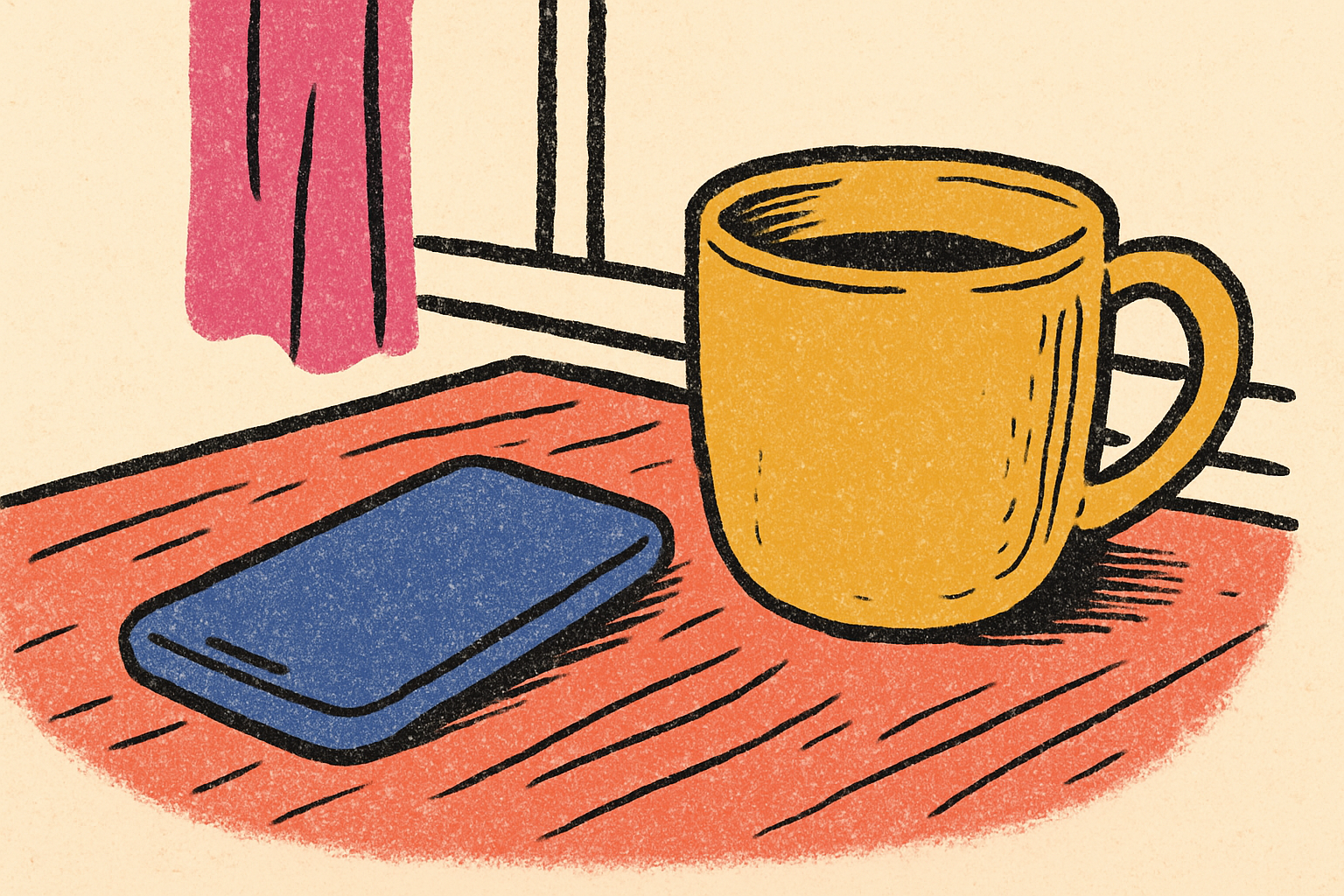
The no-contact rule is the practice of cutting all direct contact with an ex for a fixed period after a breakup, usually 30, 60, or 90 days, so your nervous system can stop chasing a reward that's hurting you. No texts, no calls, no DMs, no liking their posts, no asking mutual friends what they're up to. The point is not punishment and not a manipulation tactic. The point is to give your brain enough silence to rewire away from the person, so you can grieve, heal, and figure out who you are without them in the room.
What no contact actually is
No contact is not a strategy to win someone back. It's not the cold shoulder. It's not revenge. It's a deliberate, time-bounded boundary you set with yourself, the kind of boundary you'd set with a substance you were trying to quit.
In practice it looks like this:
- You stop initiating any contact with your ex.
- You stop responding if they contact you, with a single optional exception for true emergencies.
- You stop checking their social media, stories, location, Spotify activity, and Venmo feed.
- You remove the constant triggers from your environment. Their texts get archived or deleted. Their number gets renamed to something deliberately unattractive or blocked outright.
- You give yourself a fixed end date so the silence has a shape.
That's the whole rule. Everything else is implementation.
The science of why it works
Helen Fisher, the biological anthropologist who has spent decades scanning the brains of recently dumped people, has shown that romantic rejection activates the same neural circuitry as cocaine and opioid withdrawal. The ventral tegmental area, the nucleus accumbens, the cravings, the obsessive thinking, the 3am anguish — your brain is genuinely in withdrawal from a person who used to deliver a reliable dopamine hit and now doesn't.
Every time you text them, check their Instagram, or hear from a mutual friend that they were "kind of weird at the party," you give the addicted part of your brain a small hit. Not enough to feel better. Just enough to keep the craving alive.
No contact starves that loop.
It is not pleasant. The first two weeks usually feel worse than the breakup itself, because you're no longer using contact to numb the loss. That pain is the withdrawal curve. It peaks, and then it falls, the way every withdrawal curve does. Research on attachment and grief by John Bowlby and his successors describes the same arc: protest, despair, reorganization. The reorganization phase is where you actually become someone who can be okay again. You cannot get to it while you're still feeding the protest phase with crumbs. There's also direct evidence that ongoing contact with an ex-partner slows psychological recovery, particularly when there are no shared children to require it.
The standard durations: 30, 60, 90
There is no single correct length. Pick based on the relationship, not based on whichever number sounds heroic.
| Situation | Suggested length |
|---|---|
| Short relationship, clean breakup, mutual | 30 days |
| Situationship or 3-6 month thing you're more attached to than you want to admit | 30-60 days |
| Year-plus relationship, ended turbulently, you still check their socials weekly | 60 days |
| Long relationship, cohabitation, marriage, or any betrayal involved | 90 days |
| Narcissistic, abusive, or coercive ex | Permanent |
The duration matters less than the consistency. Thirty days of actual silence beats ninety days that you broke on day eleven and restarted.
What counts as breaking no contact
This is where people lie to themselves the most. The honest list:
- Texting them, including the "hey, hope you're okay" text that you swear is just being mature.
- Calling, including a "butt dial" you knew was a butt dial.
- Replying to or sending a DM, Snap, BeReal, or any other platform.
- Liking, viewing, or reacting to their post or story.
- Showing up somewhere you knew they'd be.
- Asking a mutual friend to find out how they are or to pass along anything.
- Texting their family member or roommate "to check in."
- Reading old texts, listening to old voicenotes, or replaying their Instagram archive at 1am. This one technically doesn't reach them, but it absolutely breaks the spell. Tara Marshall's research on Facebook surveillance of ex-partners found this kind of passive monitoring is linked to greater current distress, longing, and lower personal growth.
The point of the rule is the nervous-system reset. Anything that keeps you in the dopamine loop counts as breaking it, whether or not they ever know.
Who no contact is for, and who it isn't
No contact is for almost everyone after a breakup. It's especially powerful if you:
- Catch yourself drafting texts you don't send.
- Find your day rearranged around whether they posted a story.
- Feel a small physical lift when you see their name on your phone, even when the message is awful.
- Have an anxious or disorganized attachment pattern and tend to chase.
It's harder, but still useful in modified form, if you:
- Co-parent. You use a parenting app, you keep messages logistical, and you do not let pickup turn into a relationship conversation. That is functionally no contact.
- Work together. Grey rock the office. No personal conversations, no lunches, no after-work drinks. See grey rock vs no contact for the full decision tree.
- Live together during a transition. You set up parallel lives in the apartment until one of you moves out, and you treat each other like polite strangers.
It is non-negotiable if your ex was abusive or narcissistic. In that case the duration is forever and the rules are different. See no contact with a narcissist.

Two scenarios so you know what this actually feels like
It's Tuesday, 11:47pm. You're holding your phone in bed. The text is already drafted. "I know we said we wouldn't talk, but I had a weird dream and." Your thumb hovers over send. You put the phone face down. You feel like you might throw up. Twenty minutes later you fall asleep. That was no contact. You didn't feel strong. You felt sick. You did it anyway. Tomorrow it will be marginally easier.
Or: It's Saturday afternoon, day 22. You open Instagram by reflex and you do not type their name into the search bar. Not because you're disciplined, but because for the first time in three weeks, the thought didn't fully form. You notice this and you almost cry, because it's the first evidence your brain is finally letting go. That's the reorganization phase showing up.
How Chaz fits in
The hardest part of no contact is not the rule. It's the 11:47pm moment when your hand is on the phone and there is no friend awake. That gap is where most streaks die.
Chaz is an iPhone app that tracks your no-contact streak and gives you a voice agent you can yell at instead of texting your ex. You open it, you scream the thing you were about to send him, and the app yells back. It's not therapy. It's a pressure-release valve so the streak survives the night. Then it journals the snippet into your story so you can see, in writing, what you were almost willing to set on fire your healing for.
It's free, iPhone only, and the tagline is exactly what it does: don't text him, talk to Chaz.
How to actually start
- Pick a duration. Default to 30 if the relationship was under a year, 60 if it was longer or turbulent, 90 if it was a marriage, cohabitation, or involved betrayal.
- Pick a start date. Today is fine. So is tomorrow morning. So is "after this last conversation," but only if that conversation is actually final.
- Do the environmental work: block or mute on all platforms, archive the text thread, delete photos to a hidden folder, rename their contact to something un-tender.
- Tell exactly one person what you're doing and the end date. One. Not eight. Pick the friend who will not relapse-encourage you.
- Plan the 2am protocol now, while you're calm. What do you do when the urge hits and you cannot sleep? Walk, journal, voice memo, yell at Chaz, call the friend. Pick two.
- Mark the calendar with the end date. Not so you can text them on day 31. So you can see the finish line on day 14 when you forget there was one.
That's the whole protocol. The rule is simple. The execution is what gets you.
The honest closing thought
The version of you who gets to day 90 is not the version of you who is reading this. That person has weathered the withdrawal, grieved the relationship, picked up old interests, started new ones, and remembered what their own opinion sounds like in their own head without it being routed through what he or she would think.
You can't think your way there. You have to walk the silence.
Pick a date. Start.