On The Mend · No-Contact Rule
How Long Should No Contact Last? 30, 60, or 90 Days?


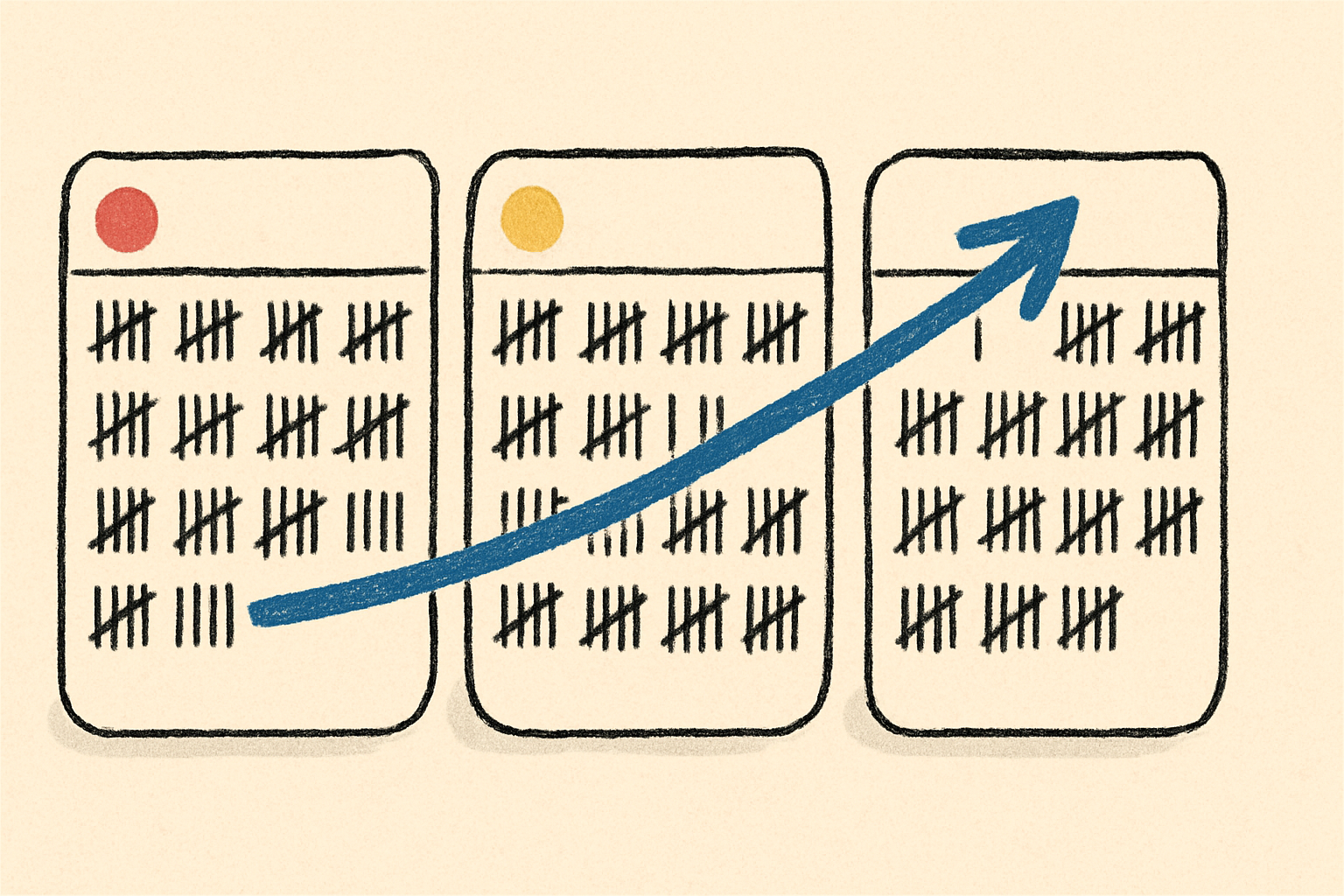
How long should no contact last? The honest answer is: long enough that your nervous system finishes the withdrawal curve, which is usually 30, 60, or 90 days depending on how long and how intense the relationship was, how recently you broke up, and how anxiously you're wired. Thirty days is the floor for short or low-stakes relationships. Sixty is for year-long or turbulent ones. Ninety is the standard for marriages, cohabitations, situationships that ran for years, or breakups involving betrayal. For abusive or narcissistic exes, the answer is permanent.
The framework, not the folklore
Most "30 day no contact" content on the internet treats the number like a magic spell. Thirty days, ex returns, healing complete. That's not how nervous systems work.
The right way to choose a duration is to ask: how long does my brain need to stop expecting input from this person? That answer depends on three things.
- How long the relationship lasted.
- How emotionally intense it was, including recency and any betrayal or abuse.
- Your attachment pattern. Anxious and disorganized attachers usually need longer because the chase instinct is louder.
A six-week situationship and a six-year marriage are not the same withdrawal curve. Match the rule to the wound.
The decision table
Find the row that fits you. Use the duration as a floor, not a ceiling. You can always extend.
| Situation | Suggested duration | Why |
|---|---|---|
| Short relationship under 6 months, mutual or amicable end | 30 days | Long enough to break the dopamine loop, short enough that "indefinite" feels like overkill |
| Situationship 3-12 months, you were more attached than they were | 30-60 days | The asymmetry is the wound; you need silence for your own clarity |
| Year-plus relationship, ended with a final fight, no betrayal | 60 days | Reorganization phase usually doesn't start until week 4-5 |
| Long relationship, marriage, cohabitation, or shared finances | 90 days | Identity rebuild takes longer than emotion settling |
| Any breakup involving cheating, lying, or betrayal | 90 days minimum | Trauma wiring needs more time and ideally professional support |
| Abusive, coercively controlling, or narcissistic relationship | Permanent | The rules are different; see no contact with a narcissist |
| Co-parenting any of the above | Permanent emotional no contact + logistical-only channel | You can do this; see no contact with kids together |
The numbers are not arbitrary. They roughly track the protest, despair, and reorganization phases that John Bowlby and his successors mapped in attachment-loss research. Thirty days gets you out of protest. Sixty gets you through despair. Ninety lets reorganization actually settle in.

Why 30 is the floor, not the goal
Helen Fisher's research on the neuroscience of romantic rejection consistently shows that the craving circuitry, the same regions involved in substance withdrawal, takes weeks to start quieting in the absence of input. The first two weeks are usually the worst. Around week three or four something genuinely shifts. You don't notice it from the inside until later.
If you quit at day 15 because it stopped hurting quite so sharply, you stopped right before the actual change. Most people who say "no contact didn't work for me" did some version of this.
Thirty days is the floor because it is the minimum amount of time that gets you past the curve's peak and into the early descent. Shorter than that and you are timing out before the rule has done anything.
Why 60 is for the year-long ones
Sixty days is the right call when:
- The relationship lasted a year or more.
- You were already checking their social media weekly when you broke up, which means the obsessive loop was active before the breakup ended it.
- You broke up turbulently. Multiple fights, on-again off-again, dramatic exits.
- You're an anxious attacher and you can feel yourself reaching for the phone every night.
What changes between day 30 and day 60 is depth. Day 30 you've stopped reflexively reaching. Day 60 you've actually started becoming someone whose day isn't oriented around them. The first is behavior change. The second is identity change.
Why 90 is for when you mean it
Ninety days is the gold standard for:
- Marriages and cohabitations.
- Situationships that ran for two or three years and never got named.
- First loves and any relationship you started before you were 22.
- Any breakup involving betrayal — cheating, lies, secret accounts, double lives.
- Any breakup where you describe yourself as "obsessed" without irony.
At 90 days the neurochemistry has had a real reset. The identity rebuild has had time to actually happen. You've gone through at least one season change, one birthday or holiday without them, and one social event where you had to introduce yourself as a single person and felt the shape of it.
People who do a real 90 days do not usually need to extend. They notice, somewhere in month three, that they've stopped counting.
When the answer is indefinite
Sometimes the right duration is no end date at all. This is not failure. This is a clean read of the situation. Indefinite no contact is the right call when:
- The relationship was abusive in any form, including emotional and coercive control.
- The ex has a pattern of hoovering, smear campaigns, or weaponizing your shared social network.
- You know yourself well enough to know that any contact ever will re-loop you.
- The relationship was a closed chapter and there is no logistical reason to talk.
The internet treats indefinite no contact as extreme. It is not extreme. For some breakups, it is just accurate.
Your attachment style changes the math
This is the variable most no-contact guides ignore and it is probably the most important one.
- Anxious attachers need longer no-contact periods because the chase instinct is biologically louder. Default up one tier. If the table says 30, do 60. See anxious attachment after a breakup.
- Avoidant attachers sometimes weaponize no contact to suppress feelings entirely. Your version of the work is to stay with the grief, not use silence to skip it. Same duration, different homework. See avoidant attachment after a breakup.
- Disorganized attachers swing between chasing and stonewalling. Pick the longer duration and find a therapist to do it with. See disorganized attachment and breakups.
- Secure attachers usually self-correct the fastest. You'll feel the urge to reach out a few times, decide against it, and be quietly fine.
If you don't know yours, our attachment quiz is at attachment style quiz after a breakup.
A real-life example of choosing
Vivian and her ex were together for three years. Lived together for the last fourteen months. He cheated, badly, and gaslit her about it for two months before she found the receipts. Internet folklore says "30 day no contact" but the math here is obvious: three years, cohabitation, betrayal. That's 90 days minimum. She picks 90 and adds two therapy sessions a week. Day 91 she doesn't text him. She's not done. She's just no longer counting.
Compare: Theo, six-month relationship that fizzled mutually, both of them sort of knew it was ending. Theo's an anxious attacher and is taking it harder than he expected. Internet folklore would push him to 90 because heartbreak content rewards drama. The actual right call is 30, maybe 45, with strong daytime structure and a 2am protocol.
Match the duration to the actual wound.
How to make the duration stick
Picking the number is the easy part. Holding it is the work. The most common failure mode is restarting the count after every slip, which is fine in spirit but in practice often becomes a way to never actually finish.
A cleaner approach:
- Pick a duration.
- Pick a start date.
- If you slip, treat it as a stumble, not a reset. You're trying to extinguish a behavior, not run a marathon perfectly. Restart only if the slip was actual contact with them. Restart with a longer duration if you slipped twice.
- Track the streak somewhere you can see it. Calendar, app, sticky note on the bathroom mirror. Visible counters help. Chaz is a free iPhone app built for this, with a streak tracker plus an AI voice agent you can yell at instead of texting him. The streak is the part that matters here.
- Mark the end date in your calendar. Not as permission to text on day 31. As a finish line you can see from day 14.
A note on "what happens on day 31"
Nothing. The duration is a floor. Day 31 you wake up and you don't text them, because by then you do not particularly want to. If you do still want to, you weren't ready, and that is also fine. Extend.
The end of no contact is not a celebration. It's a quiet pivot. You stopped doing the thing, and now you're someone who doesn't do that thing. That's all.
Bottom line
Thirty days for short, sixty for long-ish or turbulent, ninety for serious or betrayed, permanent for abusive or narcissistic. Anxious attachers go up a tier. Restarts are fine, but only if they're honest. The number matters less than your willingness to actually let the silence do its job.
Pick yours and start the count.