On The Mend · No-Contact Rule
Does the No-Contact Rule Actually Work?

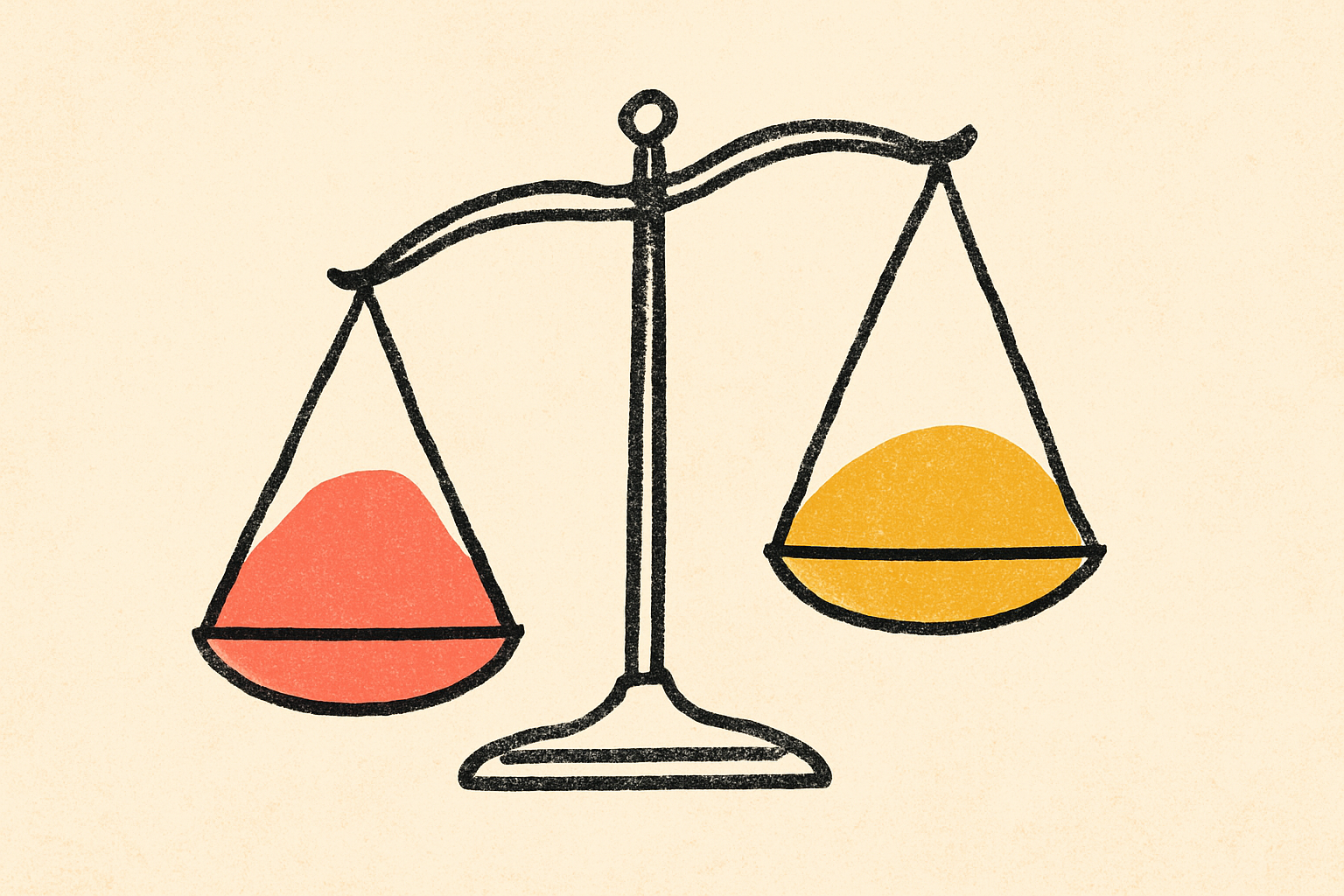
Does the no-contact rule actually work? Yes, but probably not in the way you're hoping. No contact does not reliably summon your ex back from wherever they wandered. What it reliably does is shut down the neurochemical loop keeping you obsessed, give your nervous system room to reorganize after a major attachment loss, and rebuild the part of you that existed before the relationship. That is a much bigger win than a returning ex, and it is the one the research actually supports.
What "works" actually means
Most people googling "does no contact work" are asking one of two questions, and they're really, really different.
- Will they come back?
- Will I stop feeling like I'm being slowly hollowed out with a melon baller?
The internet has been answering question one for fifteen years and making everyone feel worse. The honest answer to that question is "sometimes, but stop asking it." We cover that in will my ex come back if I go no contact.
The answer to question two, the question your body is actually screaming, is much more solid. Yes. No contact works for that. There is decades of behavioral and neuroscience research backing it.
The neuroscience answer
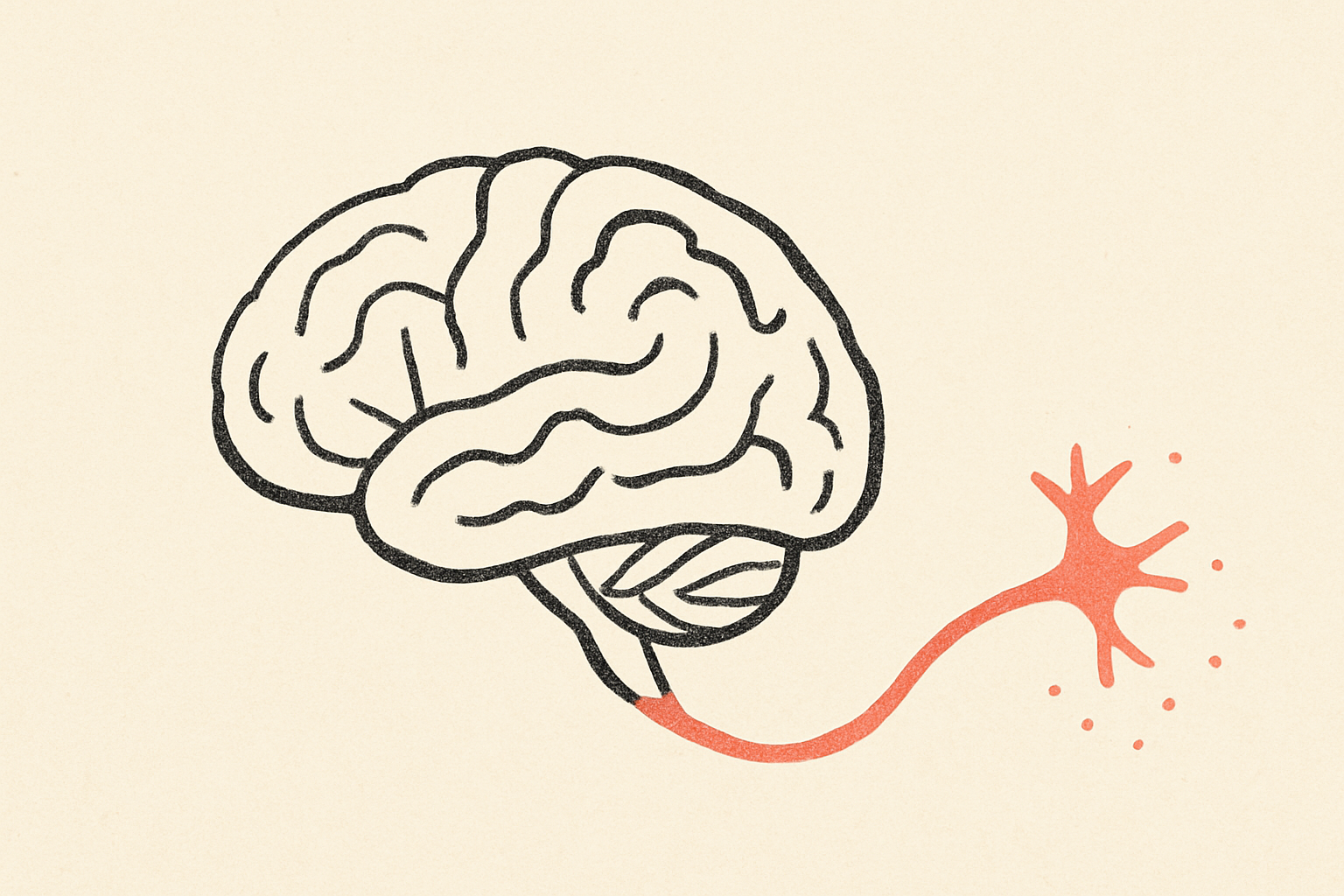
Helen Fisher, the biological anthropologist at Rutgers and the Kinsey Institute, ran a now-famous set of fMRI studies on people who had recently been dumped and still reported being in love with the person who dumped them. When those participants looked at photos of their ex, the brain regions that lit up were the ventral tegmental area, the nucleus accumbens, and parts of the prefrontal cortex involved in reward, motivation, and craving. The same circuitry, broadly speaking, that lights up in cocaine and opioid withdrawal.
Fisher's framing, repeated across her TED talks and academic work, is that romantic rejection is a motivation system, not just an emotion. Your brain is trying to get the reward back. It will keep trying as long as you keep providing intermittent reinforcement, which is exactly what checking their Instagram, re-reading old texts, and "just one quick text" do.
The behavioral psychology side of this is older than fMRI. B.F. Skinner showed in the 1950s that the most persistent behaviors are the ones rewarded on a variable, intermittent schedule. Slot machines work this way. So does an ex who replies sometimes and ignores you other times.
No contact removes the schedule entirely. With no input, the conditioned response decays. That is what "works" means here.
What you can expect, week by week
This is a rough composite, not a clinical timeline. Individual variation is enormous, especially based on attachment style and how long the relationship lasted.
- Days 1-7. Acute withdrawal. Crying jags, no appetite or all appetite, intrusive thoughts, drafted texts you don't send, dreams about them. This part feels like the rule is making it worse. It is not. You are just no longer numbing.
- Days 8-21. Fog. You go through the motions. You're functional at work in a glassy way. You still check their socials too much. Sleep gets better in inches.
- Days 22-45. The first real lift. You catch yourself laughing without performance. A song they ruined plays and it doesn't level you. You have a whole afternoon where you didn't think about them once, and then you panic that you didn't, and then it passes.
- Days 46-90. Reorganization. You're picking up old interests or new ones. You notice you don't actually want to text them, you just want to be okay, and you are increasingly okay. The relationship begins to fit inside your life instead of being the whole shape of it.
This is the arc John Bowlby described as protest, despair, and reorganization, mapped onto modern breakups. The reorganization phase is where the work pays off, and you cannot reach it while you're still feeding the protest phase.
What the research does not say
A few honest caveats so you don't get scammed by no-contact content farms.
- There is no controlled study saying "30 days of no contact recovers exes at X%." Anyone citing a specific number is making it up.
- There is no peer-reviewed evidence that no contact is a reliable reconciliation tactic. The premise of the entire "get your ex back" industry rests on cherry-picked anecdotes.
- There is robust evidence that ongoing contact with a recent ex slows emotional recovery, especially for the person who was left.
- There is robust evidence that grief and attachment loss respond to time, social support, meaning-making, and exposure reduction, all of which no contact enables.
In short, the literature supports no contact as a healing intervention, not as a relationship tactic.
Two scenarios that show the difference
Maya texts her ex every ten days. Each text is small. "Saw a dog that looked like Pepper." "Hope your mom's surgery went okay." She tells herself she's being mature. Her ex replies sometimes warmly, sometimes a day later with one word. Six months in, Maya is still crying at her desk. The intermittent reinforcement schedule is doing exactly what slot machines do.
Sam, dumped at the same time, blocks her ex on day three after one truly disastrous "closure" call. Day twelve is the worst day of her life. By day forty she has reorganized her Saturdays around a pottery class she'd been wanting to take for two years. Day ninety she has a date with someone who makes her laugh, and she doesn't yet know if it'll be anything, but she knows she's the one choosing.
Both of them love their ex on day one. Only one of them is healing on day ninety.
Why people quit no contact and call it broken
Most "no contact didn't work for me" stories are not about no contact failing. They are about the rule getting half-applied.
The standard pattern:
- They block on iMessage but keep watching stories on Instagram daily. (Marshall's research found this kind of social-media surveillance predicts worse breakup adjustment.)
- They tell themselves checking Venmo activity doesn't count.
- They keep one mutual friend in heavy rotation specifically to get updates.
- They keep the text thread pinned to the top of their messages app and re-read it nightly.
That is not no contact. That is contact with extra steps. The nervous system gets the same intermittent hit, just routed through a different channel. Then when it doesn't feel better, the rule gets blamed.
Real no contact removes the channels. All of them.
When no contact is the wrong tool
For most breakups, no contact is the right move. There are situations where you need a modified version:
- Co-parenting. You need a logistical channel through a parenting app, and you go emotional no contact. See how to do no contact with kids together.
- Shared workplace. You grey rock the office. See how to do no contact when you work together.
- Untangling a shared lease or finances. You have one final logistical conversation, ideally over email so it's all timestamped, then go silent on everything not on that list.
- Narcissistic or abusive ex. The duration is permanent, and the rules are different. See no contact with a narcissist.
If you're in one of these categories, the principle is the same. Cut the emotional channel even if you can't cut the logistical one.
How Chaz makes it actually stick
The most common reason no contact fails is not the daytime, when you have meetings and groceries and a podcast. It's the night, when your defenses are down and your thumb is on the screen at 11:52pm and there is no one awake to talk you out of it.
Chaz is an iPhone app built for that exact gap. It tracks your no-contact streak so you have something to lose. It gives you an AI voice agent you can yell at instead of texting your ex, because the urge to discharge is not the problem, the target is. And it journals what you said, so on day forty you can read the receipt of who you were on day three and feel the distance.
Free, iPhone only. Don't text him. Talk to Chaz.
So, does it work?
Yes. Not as a magic spell to get someone back. Yes as a behaviorally and neurologically sound way to stop bleeding into the wound and let it close.
The trick is to want the right thing from it. People who do no contact to manipulate a return mostly stay stuck. People who do no contact to actually heal, mostly heal. And about a third of them stop wanting the return by the time it's possible.
Pick a duration. Cut the channels. Walk through the withdrawal. You will not be the same person on day ninety, and that is the entire point.