On The Mend · Healing
The Stages of Grief After a Breakup


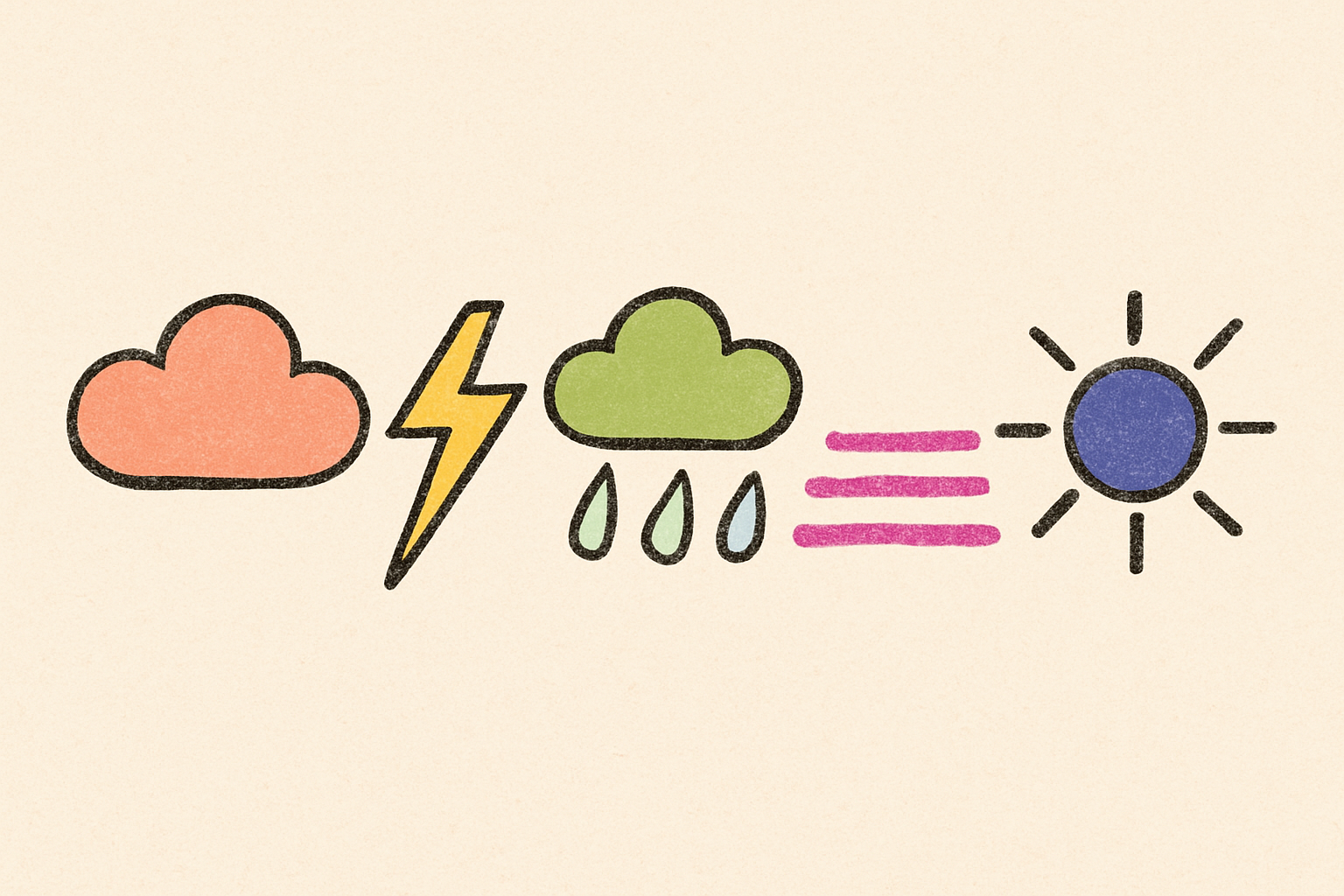
Breakup grief follows the five Kübler-Ross stages — denial, anger, bargaining, depression, and acceptance — but not in any tidy order. You'll move through them sideways, double back, hit two at once, and circle the same stage three times before it finally lets you go. The stages are a vocabulary for what's happening, not a checklist. Knowing what each one actually looks like in a breakup keeps you from panicking when grief loops, and from declaring yourself "fine" too early.
Where the model came from
Elisabeth Kübler-Ross introduced the five stages in 1969 to describe what terminally ill patients went through. She never claimed they were linear, and later in her career she pushed back against the rigid sequence the model got flattened into. Researchers since then — including David Kessler, who collaborated with her and added a sixth stage, "finding meaning" — have made the same point: the stages are emotional weather patterns, not a staircase.
Grief researchers like George Bonanno have shown that real grief trajectories are messier and more varied than the model implies. His prospective studies of bereavement identified several distinct trajectories — resilience, recovery, chronic grief, and chronic depression — and resilience turned out to be the most common, not the staged march the popular model describes. Some people skip stages. Some never visibly go through anger. Some loop through depression for months while everyone around them assumes they're at acceptance. The five-stage frame has been widely critiqued for lacking empirical support; treat it as a map of possible terrain, not a route.
With that disclaimer, here is what each stage actually feels like after a breakup.
Denial
This is the dissociated, "this isn't happening" phase. It often shows up in the first hours and days, sometimes for weeks.
Denial after a breakup looks like:
- Going to work and getting through the day on autopilot while a quiet part of you keeps thinking, "we'll talk tonight and it'll be fine."
- Telling friends "we're taking a break" when you know in your gut you're done.
- Keeping their toothbrush in the holder.
- Re-reading your last few texts looking for a sign that they didn't really mean it.
- Numbness — the absence of feeling that people mistake for being okay. It's not okay. It's the body buying time.
Denial is protective. It keeps you functional long enough to absorb the shock. It becomes a problem when it lasts more than a few weeks and you find yourself preventing the breakup from becoming real by, for example, not telling anyone or refusing to remove their stuff.

Anger
When denial breaks, anger usually arrives. This is the stage most people are most ashamed of, especially women who were taught not to be angry and men who were taught only to be angry.
Anger looks like:
- Rage-cleaning the apartment at 1am.
- Replaying every fight they started and finally letting yourself be furious about the things you smoothed over at the time.
- Hating their friends, their family, the bar where you met, the playlist, the city.
- A new clarity about their flaws that may be slightly unfair and is also probably more accurate than your pre-breakup view.
- Anger at yourself for staying, for ignoring red flags, for being "stupid." This one is grief disguised as self-attack. It is not the truth.
Anger is energy. It's the stage where you're least likely to text them, because you're least likely to want to. People sometimes mistake anger for being over it. You're not over it. You're just no longer in collapse. The anger is grief with a pulse.
Bargaining
Bargaining is where the late-night drafts live. It's the magical-thinking stage, the part of grief that tries to undo the loss by inventing a deal.
Bargaining in a breakup:
- "If I just send one thoughtful text, they'll see what they're missing."
- "If I become the version of me they wanted, we'll get back together."
- "Maybe if I gave them space and reach out in three months."
- "If I had just not said the thing on New Year's."
- The hypothetical timeline where you do everything differently.
This is the most dangerous stage for no contact, because bargaining is what reaches for the phone. It feels rational. It is not. The bargain is grief trying to bring the person back to life by negotiating with reality. Reality doesn't negotiate.
The way through bargaining is not to argue with the thoughts. It's to refuse to act on them, then write them down in a journal where they can be seen as the symptoms they are. You don't have to believe you can't get them back. You just have to not text them while you believe it.
Depression
This is the stage that lasts the longest and gets the most confused with "I'm broken forever."
Depression after a breakup looks like:
- Flat affect, the world looks gray, food doesn't taste like anything.
- Hyper-sleeping or sleep that won't come.
- The thought "what was the point of any of it" recurring.
- Crying without warning, in the cereal aisle, on the train.
- Loss of interest in the things you usually love, including the things you loved before the relationship.
- A pervasive sense of pointlessness that isn't tied to a specific thought.
Important: this is depressive grief, which is normal. It is not the same as clinical depression, although they overlap and one can become the other. If you have thoughts of self-harm, if you can't get out of bed for days at a time, if the flatness lasts more than a few weeks and you're losing function — that's the line. Read breakup depression vs clinical depression, and talk to someone qualified. In the US, the 988 Suicide and Crisis Lifeline is free, 24/7, and you can call or text.
Depression in grief is also the stage where the most actual healing happens, even though it feels like the opposite. The system is reorganizing. You are not getting worse. You are letting the loss be a loss.
Acceptance
Acceptance is not "I'm glad it ended" or "I don't care anymore." That's a different thing, often a distancing strategy, sometimes contempt with good PR.
Real acceptance feels like:
- Thinking about them and noticing the thought without it hijacking your day.
- A neutral memory of a good moment — not erased, not weaponized, just there.
- The slow return of curiosity about your own life.
- A new song you discovered, a new gym schedule, a new friend, all without comparing them to the old version.
- The ability to say "yeah, that was a real thing and now it's over" without flinching.
Acceptance is quiet. Most people don't notice it arriving. They notice it three weeks after it arrived, when they realize they haven't thought about the person in days.
David Kessler's "finding meaning" sixth stage shows up sometime after acceptance. It's the point at which you can articulate what you learned from the relationship and from losing it. Not a silver lining, not "everything happens for a reason." Just a real, specific shift in how you understand love, yourself, and what you want next.
Why the stages aren't linear
You will sit in your kitchen at 8am in something that feels like calm acceptance and then by 10pm be raging into a pillow about a text from three years ago. That is not regression. That is grief.
The stages overlap because the brain isn't processing one thing. You're grieving:
- The person.
- The future you'd planned.
- The version of you that loved them.
- The daily rhythm.
- The shared identity.
Each of those losses has its own arc. They run on parallel tracks. When you hit anger about the person, you might still be in denial about the future. When you hit acceptance about the daily rhythm, you might still be bargaining over the shared identity.
So you can be in two stages at once, or four. That's the model working, not breaking.
A scenario from each stage
Denial: You're at your desk on Tuesday. Someone asks how the weekend was. You say "fine," and you mean it, because you have not yet allowed Saturday to be real. Saturday is the day they moved out.
Anger: It's Thursday night. You're scrolling old photos and you suddenly see the one from his birthday where his arm is around you and his eyes are on someone else in the background. You throw the phone across the bed. You weren't ready to feel that, but now you are, and the part of you that has been kind about him for a year goes silent.
Bargaining: It's Sunday at 11pm. You've drafted three texts. One is "hi." One is a paragraph. One is "I had a dream about you, and." You send none. You go to sleep furious at yourself for the drafts, which is grief on top of grief.
Depression: It's a Wednesday two months in. The acute pain is gone. What's left is gray. The shower feels like a lot. You eat half a sandwich and forget the other half on the counter. Nothing is wrong, exactly. Nothing is right either.
Acceptance: It's a Saturday morning seven months later. You walk into the coffee shop you used to go to together. You order, you read your book, you leave. On the walk home you realize you didn't think about them at all in there. You also don't text anyone about this milestone, because it doesn't feel like a milestone. It feels like a Saturday.
How Chaz fits
Bargaining is the stage that breaks no-contact streaks. It happens late at night, the thoughts feel reasonable, and there's nobody awake to call.
Chaz is an iPhone app that gives you somewhere to put the bargaining urge that isn't your ex's inbox. You yell into the voice agent, the agent talks back, and the app journals the snippet so the moment becomes evidence of a stage you walked through, not a streak you torched. It's free and iPhone only.
How to use the stages without being held hostage by them
A short, honest list:
- Name the stage when you notice it. "This is bargaining" is more useful than "I'm going crazy."
- Don't trust acceptance the first time it shows up. It tends to flicker and then leave for a while. That's normal. The fifth time it shows up it tends to stick.
- Don't perform acceptance for friends or social media. Performance makes the actual stage take longer.
- If depression deepens past a few weeks, talk to a professional. Grief and depression overlap. Both are treatable.
The closing thought, because grief deserves an honest one: the stages aren't a thing you complete. They're a thing you live through, and one day you look around and notice you're somewhere new. The somewhere new is real. You just don't see it from the inside.
You're not stuck. You're moving. You can't see it because it's you.