On The Mend · Healing
10 Signs You're Actually Healing From Your Breakup

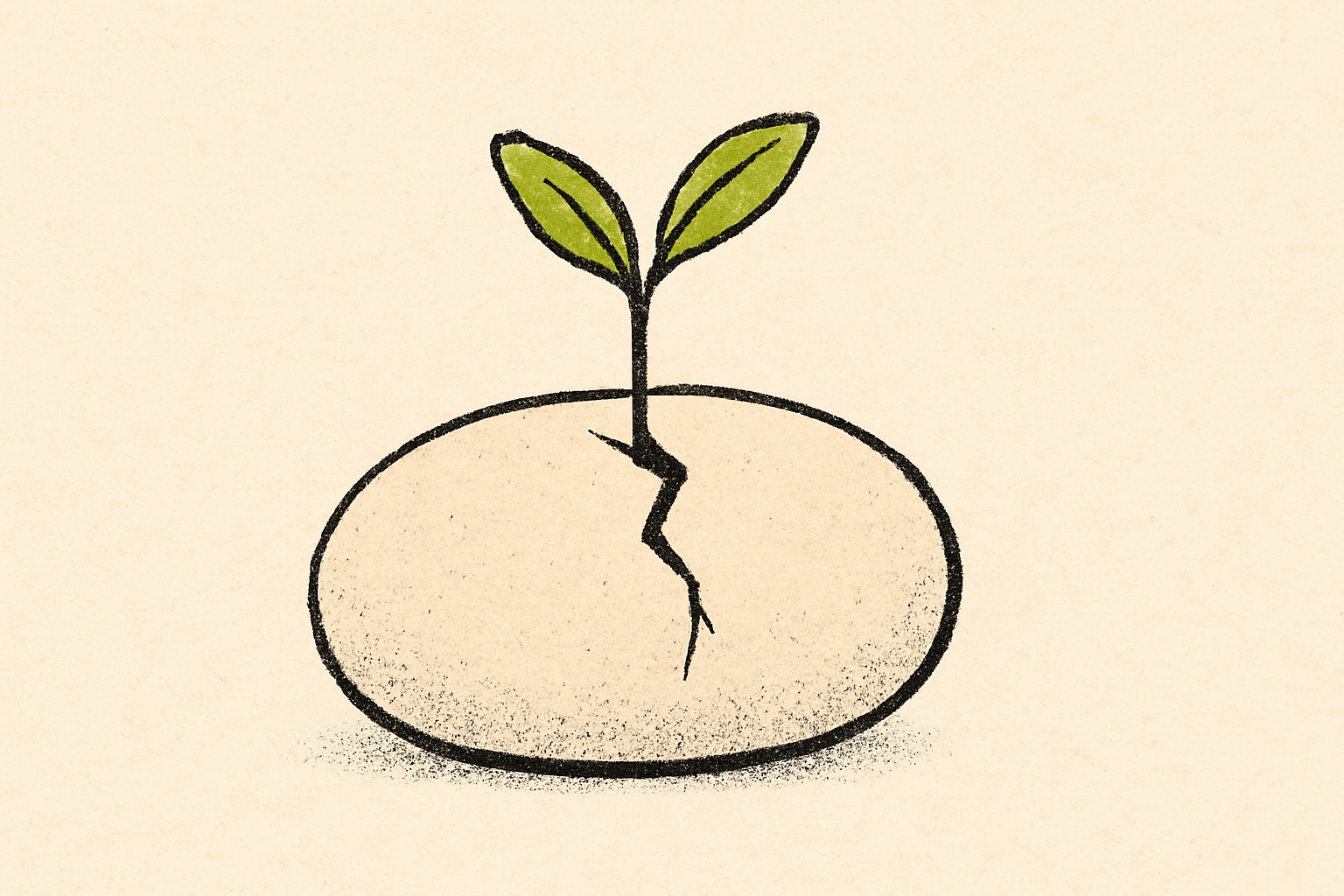
You can't always tell when you're healing from a breakup, because healing doesn't announce itself. It feels like nothing, then it feels like meh, then it feels like Tuesday, and only in retrospect do you realize you haven't been actively grieving for a stretch. The signs you're actually healing are quiet, unsentimental, and easy to miss. Here are the ten that matter.
Why healing is so hard to notice
Grief is loud. Healing is the absence of the loud. Research on grief trajectories by George Bonanno shows that resilience — gradual, often quiet adjustment — is the most common pattern after loss, not the dramatic arc people expect. When the loud quiets, what's left feels like nothing, which the brain often misreads as numbness or as "I'm not feeling anything, something must be wrong with me."
Most signs of healing are by definition things that didn't happen. The text you didn't send. The post you didn't check. The thought you didn't have at 8am. You're looking for the negative space, which is harder to see than the wound.
This is also why people often think they're regressing when they're not. Grief moves in waves. A bad Wednesday in month four can feel like proof you're back where you started. You're not. The trend line over weeks matters more than any single day. With that in mind, here's what to actually look for.
1. You go longer stretches without thinking about them
Early on, you think about them constantly. A few weeks in, the gaps start. First it's an hour, then a few hours, then an afternoon where you realize they didn't enter your head. The first time it happens, it often comes with a jolt — almost a guilt — followed by recognition. The brain is genuinely letting go.
This is one of the cleanest signs because it's measurable. If you used to think about them fifty times a day in week one and you're at five times a day in week six, that's data. You're healing whether you feel like it or not.

2. You stop checking their social media reflexively
There's a difference between consciously deciding not to check and not even thinking to check. The first is willpower. The second is healing.
When you find yourself on Instagram for ten minutes and didn't search their name once, when you scroll past a mutual friend's post without going down the mutual-acquaintance rabbit hole, when you forget to look on their birthday — that's the surveillance loop dissolving. The need to know what they're doing was a hook. The hook is loosening.
3. Their songs stop wrecking you
For weeks the wrong song in a coffee shop can collapse your day. Then one day the song plays, you notice it's the song, you have a small wash of feeling, and you keep doing what you were doing. The song is still the song. You're no longer the same listener.
This goes for restaurants, neighborhoods, smells, photos, and clothes. The trigger doesn't disappear. Your response to it gets shorter and quieter.
4. You can think about a good memory without it ruining the day
Early grief makes all the good memories radioactive. You can't think about the vacation or the first weekend without it being unbearable. Healing means you can recall a specific good moment, feel a real but bearable tenderness, and then move on with your day.
The good memories stop being weaponized against the present. They become what they actually are — moments of a finished thing that was real.

5. You stop arguing with them in your head
The internal courtroom — where you're litigating every fight, rehearsing what you'd say if you ran into them, mentally winning the breakup — is exhausting and is a sign of unprocessed anger.
When the courtroom goes quiet, you've moved through enough of the anger stage that you no longer need to win. Rumination — the kind of repetitive replaying that fuels imaginary arguments — is associated with longer depressive episodes, so its fading is a real signal of recovery. You don't need them to admit they were wrong. You don't need to explain yourself. You don't need the imaginary conversation. You're letting them be wrong, in your understanding, and not needing them to agree.
6. You can imagine them with someone else without it gutting you
This is one of the most reliable late-stage signs. Early on, the thought of them with another person is unbearable. You picture it constantly and against your will.
When you can entertain the thought — "they probably will end up with someone, eventually" — and not lose hours to it, you've crossed a real line. It doesn't mean you wish them well, necessarily. It means the future they have without you no longer feels like a wound. It's just a fact.
7. You stop telling new people the breakup story unprompted
For the first months, the breakup is the central fact of your social existence. It comes up in every conversation, often without anyone asking. New coworker, new gym friend, person at a wedding — they all hear the story.
Healing means the story stops being the lead. You meet someone new and an entire conversation goes by without you mentioning it. Later, you realize you didn't. The breakup is no longer the headline of your identity. It's a chapter you can refer to without leading with.
8. You sleep through the night more often than not
Sleep is the most underrated metric. Grief shreds sleep. As you heal, sleep returns, sometimes in fits and starts. The 3am wakeup with the gut-punch thought becomes less frequent. The night you used to dread becomes a regular night.
If you're sleeping seven to eight hours most nights, you are healing. The body cannot do that while still in acute attachment-loss alarm. Restored sleep also restores the prefrontal-amygdala circuit that regulates emotional reactivity, which is one of the reasons everything starts feeling more manageable. The fact that the body is letting go of the alarm is itself evidence the brain is too.
9. You make plans without checking what they would have thought
In a long relationship, you internalize your partner's voice. Their opinion gets consulted, even silently, on what you wear, where you go, whether you take the job, whether you book the trip.
Healing shows up as the moment you book the flight, sign the lease, take the offer, or buy the thing you would have flinched at, and you don't pause to imagine their reaction. The internalized voice is going quiet. The voice was a roommate in your head that paid no rent. It is moving out.
10. You notice you're noticing nothing
The strangest sign, and the most reliable. You'll be doing something ordinary — walking to the train, ordering coffee, watching a show — and you'll suddenly notice that nothing is happening inside you about them. No background ache, no low-grade longing, no rehearsed sentence. Just the day.
This sign usually comes in flashes first, then in longer stretches. The first time you notice it might still be followed by a wave of grief, because noticing the absence of the wound can briefly summon the wound. That's normal. Over time, the noticing stays noticing.
A scenario from each end of the curve
Month two, day where you don't think you're healing: You cried in the car this morning at a stoplight. You felt like a fool. You went to work. You got through the day. You went home. You did not text them. You went to bed. That day was healing, even though it didn't feel like anything but pain. The action that mattered — not texting them — was the spine of the recovery, and you held it on a day that felt like collapse.
Month six, day you didn't realize was the day: You had brunch with a friend. The friend mentioned your ex in passing because she ran into them at a wedding. You said "oh, cool, how were they," and then moved on. You finished your eggs. You went home. Three hours later you realized you didn't think about them again after the brunch. You did not feel triumphant. You felt like you were having a regular Saturday. That regular Saturday is the entire goal.
What to do with the signs
A practical short list:
- Track them, even crudely. A note in your phone with the date and the sign helps you see the trend.
- Don't perform them. Posting "I'm healed!" is a strong sign you're not. Healing doesn't perform.
- Don't panic when a sign disappears for a week. Grief loops. The trend is what matters, not the snapshot.
- Don't tell your ex any of this. The signs are for you. Sharing them with the person you're healing from undoes some of them.
Where Chaz fits
Some of these signs are signs partly because of what you didn't do — the text not sent, the profile not checked, the post not made. That requires support during the in-between hours.
Chaz is an iPhone app that tracks your no-contact streak and gives you a voice agent to talk to when the urge to break it shows up. Each day the streak grows is one more day you accumulated the signs above without realizing it. The journal feature catches your snippets across weeks so you can read back and watch your own voice change. That changing voice is one of the clearest signs of healing there is. Free, iPhone only.
The closing thought
You will not heal in a way that feels like healing while it's happening. You'll heal in a way that, in retrospect, was so quiet you almost missed it.
The signs above are the breadcrumbs. They don't add up to a triumphant arrival. They add up to a Tuesday where you ordered coffee, walked home, and didn't think about your ex once until someone else mentioned them, and then you went on with your day.
That Tuesday is healing. You're closer to it than you think.