On The Mend · No-Contact Rule
The 60-Day No-Contact Rule: When 30 Isn't Enough

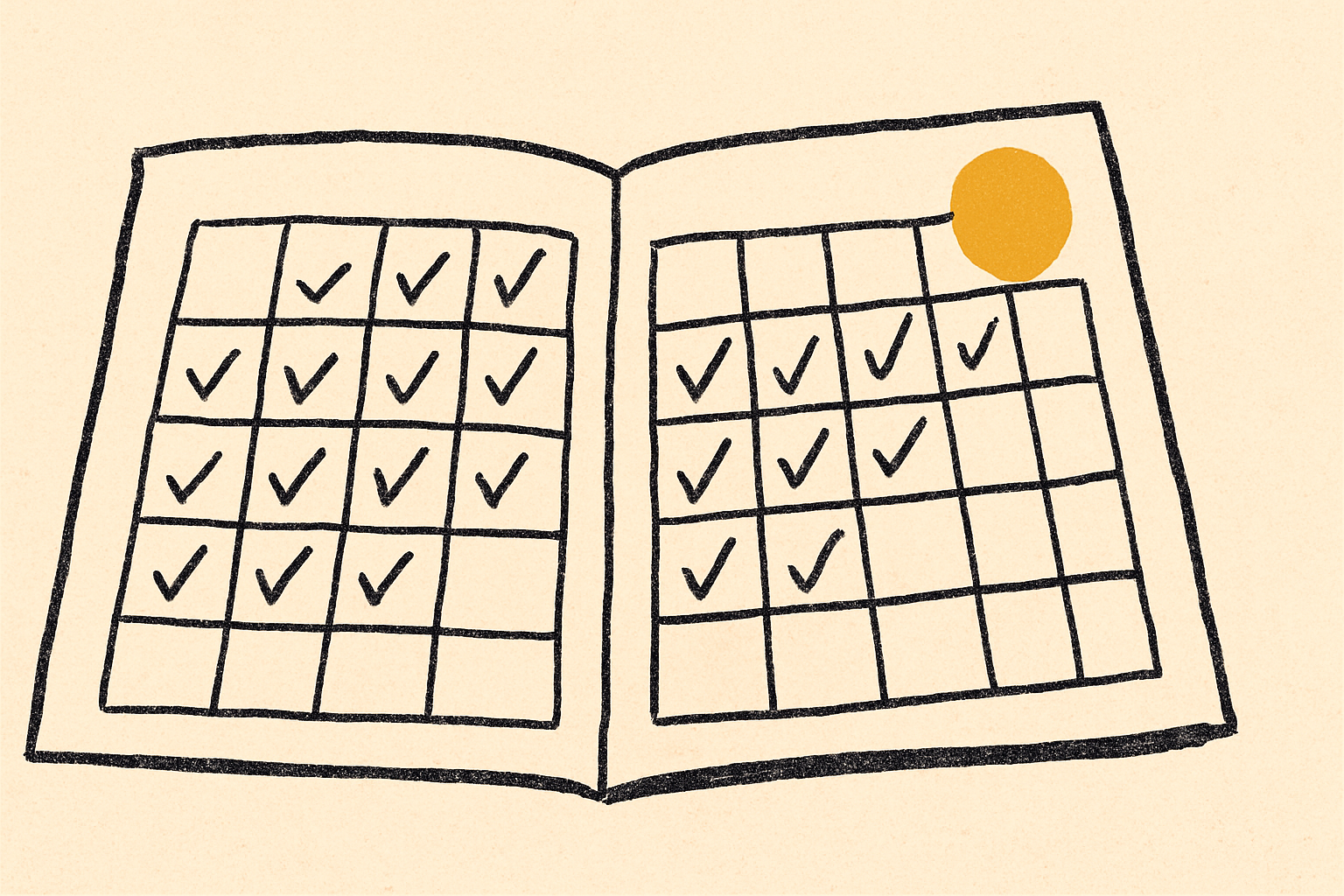
The 60-day no-contact rule is two months of zero direct contact with your ex, used when 30 days isn't enough to finish the withdrawal curve. It's the right length for relationships that ran a year or longer, breakups that were turbulent or on-and-off, anxious attachers who reach for the phone every night, and anyone still compulsively checking their ex's social media a month after the breakup. Sixty days is long enough for the dopamine loop to truly weaken and for identity reorganization to start, not just behavior change.
Who should pick 60 instead of 30
The honest test: at day 30, are you done, or are you white-knuckling? Some people are genuinely ready to exit the formal challenge on day 31. Others have just been holding their breath, and the second they stop counting they're going to text. If you're in the second group, you need 60.
Specifically, pick 60 if:
- The relationship was a year or longer.
- It was an on-again, off-again pattern for most of its run.
- You broke up over a fight that felt unresolved.
- You've already failed a 30-day attempt and the second attempt needs more runway.
- You're an anxious attacher and the chase instinct is loud.
- You were still checking their social media weekly when you broke up, which means the obsessive loop was already running.
- The breakup is less than two weeks old and you're trying to plan ahead.
Pick 30 if the relationship was shorter, cleaner, or you have an avoidant pattern and 60 days of forced silence would just be a way to skip the grief entirely. The point is to finish the curve, not to win at no-contact.
What changes between day 30 and day 60
This is the part 30-day guides skip. Days 30-60 are not just "more of the same hard part." They're a different phase of recovery, and the work is different.
Days 30-45: the second descent
By day 30 the acute withdrawal has eased. The first lift has shown up. You're not crying every day. You're sleeping. You're functioning. And, crucially, you've stopped having the urge to text every hour.
This is the danger zone for a 30-only attempt, because you feel okay enough that you tell yourself you could handle one conversation. You're misreading "the rule is working" as "I no longer need the rule."
Days 30-45 are where the brain finishes a real first pass of recalibration. Songs lose their teeth. Restaurants you used to share become just restaurants again. You stop physically scanning the room for them at parties. The reward and craving circuitry Fisher's fMRI work documented has finally had enough silent time to dampen.
The work in this phase is to not interpret stability as completion. Stay the course.
Days 46-60: identity reorganization begins
Days 46-60 are where the actual person you're going to be next starts showing up. You're not "back to your old self." You don't get that. You're becoming a new version that absorbed the relationship and is no longer organized around it.
This shows up as:
- Picking up a hobby you'd let go of for them.
- Realizing you don't want to listen to the music you listened to together, not because it hurts, but because you don't love it as much as you said you did.
- Noticing that an opinion you'd been holding was actually theirs.
- Making a small life decision (rearranging furniture, repainting a wall, changing a routine) without unconsciously checking it against what they'd think.
This phase is quieter than the early grief and it is the most important part of the recovery. It is also the part you cannot rush. Sixty days exists because identity reorganization needs more than a month to start being visible.
Common stalls in the second month
Most people who fail a 60-day attempt fail in one of three patterns. Knowing the patterns helps you spot them in yourself.
- The "we should be friends now" relapse around day 35. Your nervous system has settled, you're feeling magnanimous, and you tell yourself a coffee would be "mature." It will not be. Friendship with a recent ex requires both of you to have completed the grieving and the identity reorganization, and on day 35 neither of you has. Research on in-person contact with ex-partners after separation found it predicts higher psychological distress two months later, especially without shared children. See how to respond if your ex texts you.
- The doomscroll workaround around day 40. You blocked them on iMessage and Instagram, but you're now checking their LinkedIn, their Venmo, or their friend's account where they were tagged. Same dopamine loop, different channel. Cut the workaround the moment you notice it. See how to stop checking ex social media.
- The crisis text around day 50. Something happens (job loss, family thing, friend drama, anniversary) and the urge to call them is overwhelming because they were the person you'd have called. You will not call them. You will call the person on your designated list, even if they are a less ideal recipient. The grief of having to use a B-list recipient is part of the work.
A real-life example
Naomi and her partner of two and a half years broke up after a slow erosion that ended in a fight neither of them planned. Day 1 was awful. Day 14 was a fog. Day 21 was the first lift. Day 30 she thought she might be ready to text, "just to see if he's okay." She extended to 60 instead.
Days 30-45 she repainted her bedroom from sage green (his color) back to the white she'd had before they met. Days 46-60 she joined a run club. Day 58 she ran into him at a bar and was polite, brief, and went home and didn't cry. Day 60 she didn't text him. Day 61 she didn't text him. By day 90 she didn't particularly want to.
The 60 was the right length because she was still holding her breath at day 30. By day 60 she was breathing on her own.
How to actually do the 60
The mechanics are the same as the 30-day challenge: block everywhere, archive the threads, tell one friend, visible streak counter, two replacement rituals, the why-I'm-doing-this letter, and the pre-written 2am protocol. The differences for 60 are about pacing, not setup.
- Mid-point check-in. Around day 30, write yourself a one-paragraph update. What's better, what's still hard, what surprised you. This is not journaling for closure. It's documentation so day 60 you can see the distance.
- A real activity for the second month. Sign up for something that starts around week 5 and runs through week 8. A class, a league, a project. Not "I'll start working out." Something with a calendar slot and other people expecting you.
- A new chair, a new coffee mug, a new something physical in your space. Make one small environmental change so your apartment registers as a place that's been lived in by post-breakup you, not just an apartment your ex used to be in.
- A budget for friend bandwidth. You will need them more in month two than month one, because the acute crisis is over and people stop checking on you. Pre-schedule three dinners or three coffee dates across days 30-60 so you don't run on social fumes.

The streak that survives the boredom
The first 30 days are loud. The next 30 are quiet, and that's where streaks die. People can survive crisis. People are weirdly bad at surviving a calm Tuesday.
Chaz is built for the quiet part too. The streak counter gives the boredom something to lose. The AI voice agent is there for the random 9pm Wednesday when the urge spikes for no reason and you don't even want to bother a friend with it. You yell, the app yells back, you go to sleep. Free, iPhone only.
The point isn't the app. The point is having a way to discharge the urge that doesn't end with you texting him.
What day 61 looks like
You wake up. You don't text him. You think about it for about four seconds and then you don't.
You'll have a decision: extend to 90, or end the formal count. Extend if any of these are true:
- You're still actively reaching for the phone most days.
- The breakup involved betrayal and the 60 didn't feel like enough.
- The relationship was a marriage, cohabitation, or other entanglement that warrants the full 90.
- You just want to. There's no penalty for extending.
End the count if you are quietly fine, you've reorganized your routines, and the rule has stopped feeling like the main fact of your life. That's the actual win.
Sixty days will not make him come back, and it isn't supposed to. It will make you the kind of person who doesn't need him to.