On The Mend · Healing
How to Rebuild Your Self-Worth After a Breakup

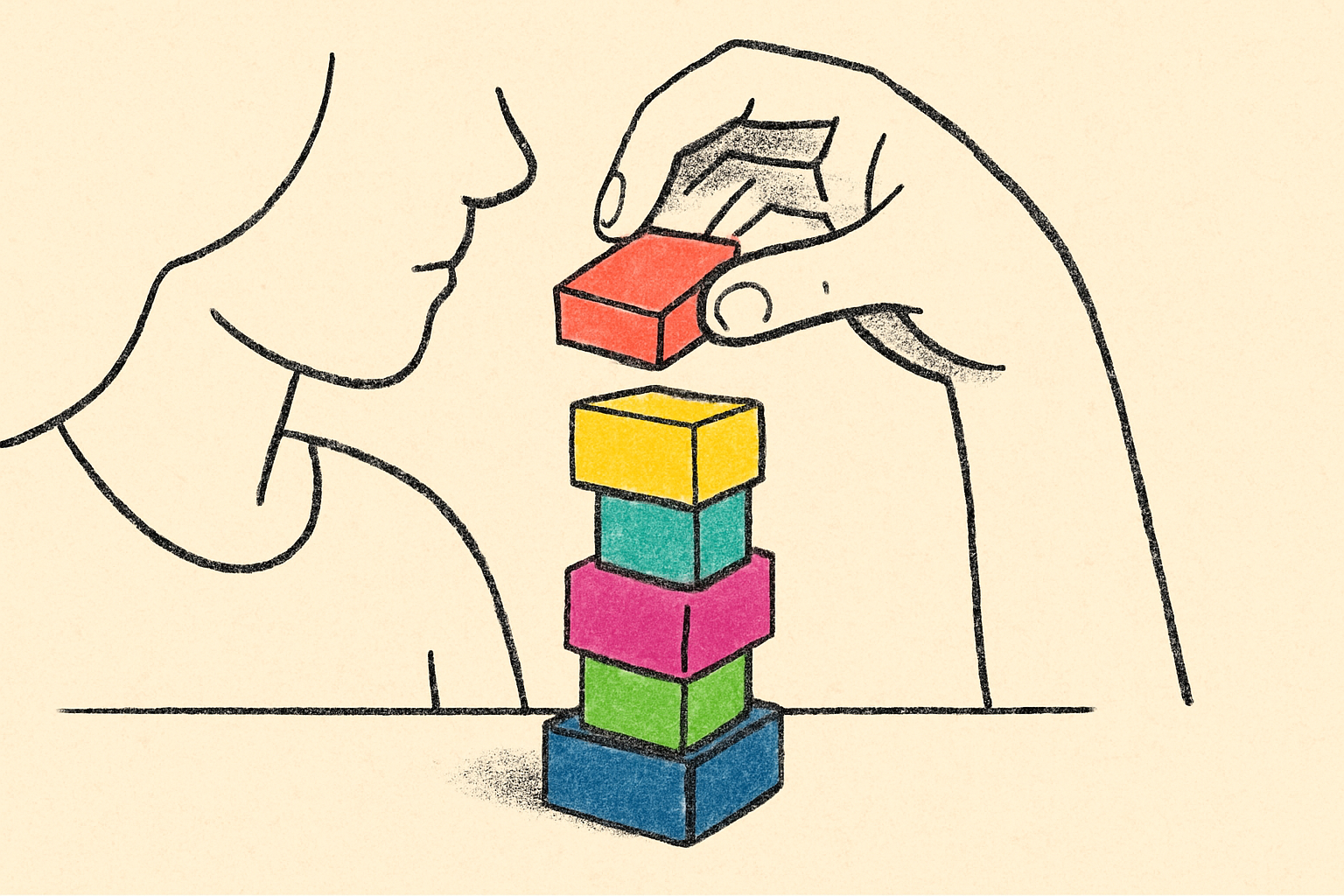
Rebuilding self-worth after a breakup is not done through affirmations, mantras, or aggressive positivity. It's done through evidence — small, repeated, observable evidence that you are still a functioning, valuable, distinct person, accumulated over weeks until your nervous system believes it. The work has six parts: separating yourself from the relationship narrative, gathering new evidence through small wins, reconnecting with your pre-relationship identity, caring for the body, re-anchoring socially, and learning to see yourself from outside the inner critic. Here's how each one works.
Why breakups gut self-worth even when you initiated them
People are surprised by this. They think, "I ended it, so I shouldn't feel like this." But the self-worth crater after a breakup is not about who left. It's about what was lost on multiple layers at once.
In a relationship, your self-concept gets mirrored back to you constantly. They tell you you're smart, you're funny, you're attractive. You see yourself in their eyes. After a breakup, that mirror is gone, and what's left is whatever your internal voice has been saying underneath the relationship's noise. For most of us, that voice is harsh.
Worse, the breakup gets interpreted by the brain as evidence. "If I were enough, this wouldn't have happened." That sentence is grief, not truth, but the nervous system doesn't care. It treats it as data and adjusts your self-image downward to match.
Research on self-expansion theory by Arthur Aron describes long relationships as a literal expansion of the self — your partner becomes integrated into your self-concept, a process Aron and colleagues called "inclusion of the other in the self". When the relationship ends, what feels like collapse is the contraction of that expanded self. You haven't become a smaller person. You've lost the part that was them. The work is to fill the space with you, not to wait for a new person to fill it.
The six-step rebuild
This is a HowTo, not a vibe. Each step is concrete.
Step 1: Separate yourself from the relationship narrative
Get out a notebook. Write down, in plain language, the story you're currently telling about yourself because of the breakup. Examples:
- "I'm not lovable."
- "I'm too much."
- "I'm too needy."
- "I was the broken one in the relationship."
- "No one will want me at my age."
- "I picked them, so I clearly can't trust my own judgment."
These are not facts. They are stories the breakup is generating, and they sound true because they're loud and recent.
Underneath each one, write the actual evidence for it from your life. Not from the relationship. From your life. You will find, almost every time, that the evidence is much thinner than the story.
The story "I'm not lovable" is contradicted by every friend who has stayed friends with you, every family member who calls, every coworker who lights up when you walk in, every former relationship that included real love before it ended. The story is grief talking in absolutes. The evidence is the actual ledger.
You don't need to argue the story away. You just need to see it as one interpretation, not the truth.
Step 2: Gather new evidence through small wins
Self-worth is built on actions that you completed, not on things you thought about yourself — a pattern aligned with Bandura's research on self-efficacy, where mastery experiences are the most reliable source of belief in your own competence.
Pick three small daily actions. They have to be small enough that you can do them on a bad day. Suggested:
- Bed made before 10am.
- A walk, even ten minutes.
- One thing put away that was out.
Track them. A simple checkbox is fine. After two weeks, you have 14 days of data. Most of those days you will have completed at least two of three. That is evidence about who you are that the breakup can't argue with. You are someone who does what they said they would do. You are someone who keeps small promises to themselves.
Then add one slightly bigger thing per week. A run you've been putting off. A bill you've been avoiding. A creative project you started and dropped. Each completion is another deposit.
This is not about productivity. It's about evidence. Self-worth that's grounded in evidence is more stable than self-worth grounded in feeling, because feelings change weekly and evidence doesn't.
Step 3: Reconnect with identity outside the relationship
Long relationships displace parts of you. Make a list of the displaced parts.
Ten things you used to do, love, watch, listen to, read, eat, or visit before the relationship that you stopped doing during it. Examples:
- The kind of music you loved that they didn't.
- The friend group you saw less because they didn't fit.
- The hobby you let go of.
- The kind of food you stopped cooking.
- The way you used to dress.
- The neighborhood you used to spend time in.
- The shows you used to watch alone.
- The way you used to spend Sunday mornings.
- The kind of conversations you used to have with strangers.
- The version of your sense of humor that got smaller in the relationship.
Pick three from the list. Reintroduce them this week. The reintroductions will feel awkward. That's normal. The awkwardness is the part of you that got dusty trying to come back online.
Step 4: Care for the body
Self-worth is partly a nervous-system state. A body in burnout cannot generate the chemistry of "I am okay." It can only generate the chemistry of "I am in danger." You will read everything that happens through that filter.
The fundamentals, again, because they keep being the answer:
- Sleep eight hours, even badly. Sleep is the substrate of emotional regulation.
- Eat protein at every meal, even when appetite is gone.
- Move daily. Walking counts. Sun on your face.
- Hydrate, the boring way, before coffee.
- Cut alcohol way down for at least the first month.
When the body is in better shape, the same intrusive thought ("I'm not enough") will land with less force. That's not a placebo. It's neurochemistry.
Step 5: Re-anchor socially
In a long relationship, your social field can narrow to one or two people. After a breakup, you suddenly need a wider net, and the people you most need are the ones who knew you before the relationship.
Why this matters: they are carrying a version of you the breakup didn't touch. They remember you funny at 19, or competent at 27, or alive at 33. When you spend time with them, you get glimpses of yourself that the breakup is currently making it hard to access.
The action:
- Reach out to three people who knew you pre-relationship. One coffee, one call, one anything.
- Don't lead with the breakup. Let it come up naturally if it does.
- Spend time being who you are around them, not who you were in the relationship.
This is also where new social inputs help. A class, a gym, a co-working spot, a regular meetup. People who never knew the relationship and who therefore only know you. Their version of you is also corrective.
Step 6: The third-party perspective exercise
This is the one most people skip and the one that does the most lifting.
Write a paragraph describing yourself the way a good friend who loves you would describe you. Specific. Not "she's great." More like: "She's the one I call when I'm spiraling, because she'll listen without judging and then tell me the truth. She makes a Tuesday feel like something. She remembers what I told her three months ago. She laughs at her own jokes in a way that makes everyone else laugh too."
Take time. Make it real.
Read it out loud when self-worth is at its lowest. Read it in front of a mirror if you can manage that without feeling absurd. Read it in the car. Read it before bed.
This works because your inner critic has a near-monopoly on how you describe yourself. Putting a different voice in the system, even one you wrote yourself, breaks the monopoly. You start to remember that the inner critic is one perspective, not the truth.
A scenario from week three
It's a Saturday morning. You're at the coffee shop you went to alone before the relationship and abandoned during it. You order the drink you used to order. You read the kind of book they thought was pretentious. You feel, for about twenty minutes, like a slightly older version of the person you were before this whole thing started. You don't post about it. You go home. You make the bed. You take a walk. By the end of the day you have done three small things on your list and spent an hour with a part of yourself that is older than the relationship and is going to be around longer than the grief. That day is the rebuild happening.
What not to do
A short list:
- Don't post the glow-up. Performing recovery on social media tends to crowd out the actual rebuild.
- Don't try to rebuild self-worth through the next relationship. It outsources the work. The next person will not be able to mirror back a version of you that you haven't built yet.
- Don't compare your timeline to anyone else's. Self-worth recovery is silent and slow. Other people's looks fast because you only see the highlight.
- Don't confuse contempt for your ex with self-worth. They feel similar for a minute. They are not the same thing. Contempt is fragile. Built self-worth is not.
Where Chaz fits
Self-worth gets ambushed at night, in moments where the only voice in your head is the harsh one. The fix in those moments isn't a journaling slot you'll miss because it's 1am. It's something to talk to right now.
Chaz is an iPhone app with an AI voice agent you can yell at, vent to, and run the third-party exercise with out loud. You can ask it to remind you what you're actually like when the inner critic is the only voice in the room. The app also tracks your no-contact streak, which itself is an ongoing piece of evidence about who you are — someone who keeps a promise to themselves over weeks. Free, iPhone only.

The closing thought
You did not become unworthy because someone left. You became someone who got left. Those are not the same story, even though grief tries to merge them.
The rebuild is slow. It's mostly invisible. It's mostly small. It happens through repeated, modest acts of showing up for your own life when nobody else is watching.
You're going to be a self again. A bigger self, in fact, because the rebuild tends to be more honest than the original. The version of you that survives this is the version you actually wanted to be all along.
Pick one step. Start there. Tomorrow.