On The Mend · Edge Cases
How to Get Over an Ex You Still See Every Day

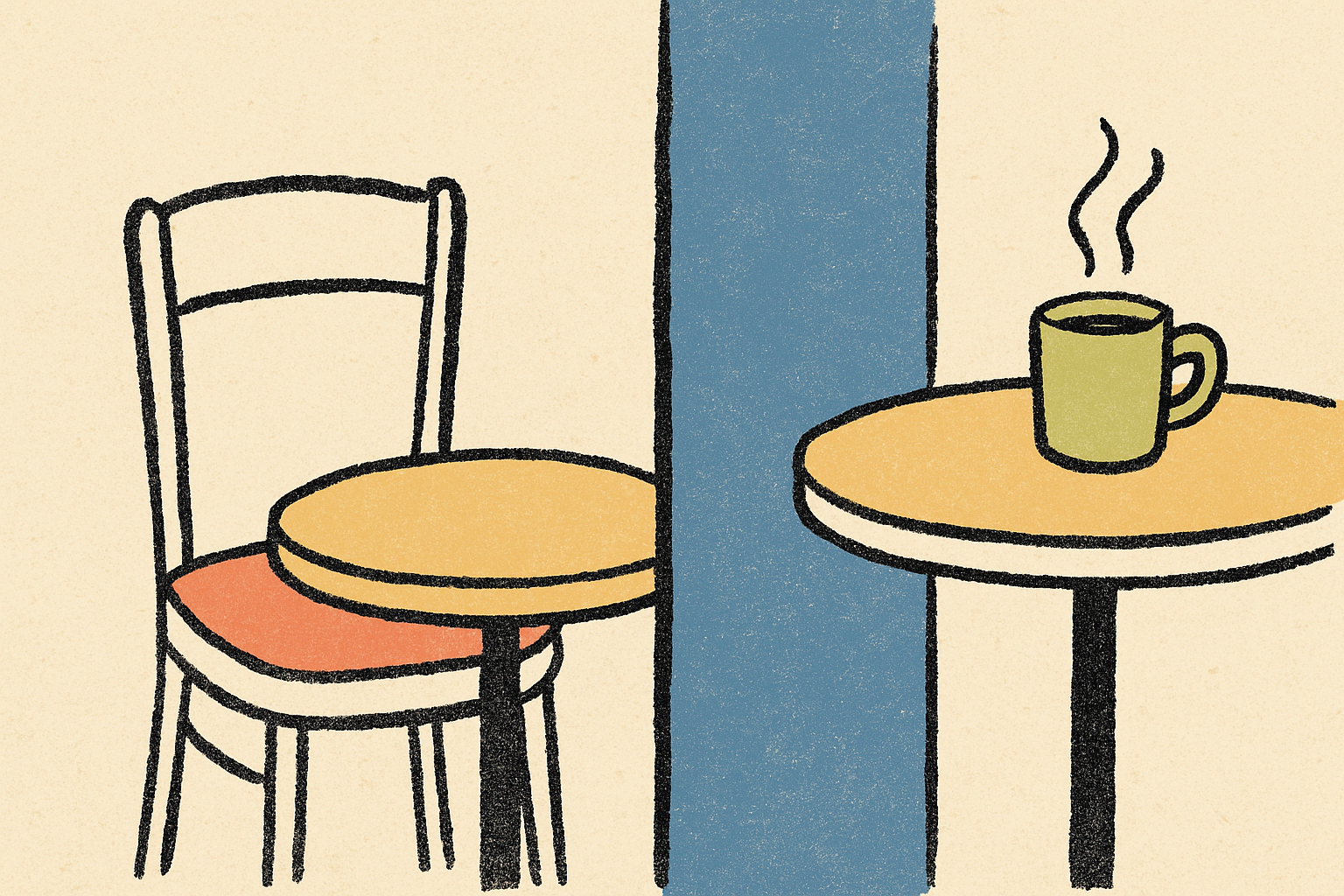
Getting over an ex you still see every day requires a different model than the standard no-contact playbook, because full no contact isn't on the table. Same office. Same friend group. Same gym. Same kid's school pickup. The healing project shifts from "remove this person from your life" to "stop being knocked off course every time they show up." The frame for this is contained contact — a small set of rules that drop your daily exposure to the ex from emotional to administrative. This post is how to actually do it.
Why contained contact works when no contact can't
No contact works because it removes the trigger. The brain stops getting pinged. The cortisol stops spiking. The dopamine rewiring can happen.
When you can't remove the trigger, your job is to dampen its impact. The mechanism is different — you're not erasing them from your nervous system's input stream, you're teaching your nervous system that this particular input is no longer load-bearing. That's slower than no contact but it works, and it's often the only option for the people who actually need it.
Research on emotional regulation, including work by James Gross on response-focused vs. antecedent-focused regulation, suggests that suppression in the moment is metabolically expensive and not very durable. What works better is changing the meaning of the trigger over time — reappraisal, contextual shifts, exposure under low-stakes conditions. Contained contact uses the same logic. You don't pretend they're not there. You shrink what their presence means.
The 80/20 reality
Here's the thing nobody tells you about contained contact: it's not consistent. Eighty percent of the time, you'll be fine. You'll see them in the kitchen at work and feel a small twinge and move on. Twenty percent of the time, something will hit — they'll laugh in a meeting and your chest will close, they'll show up to the friend gathering with someone new and you'll go home wrecked, they'll be in a good mood on a day you're already raw.
The 80/20 is not failure. It's the actual shape of the healing curve when the trigger is in your environment. Expecting linear progress will make you feel like you're failing. Planning for ambush days will let you take them in stride.
A useful frame: you're not aiming for "I never feel anything when I see them." You're aiming for "when I feel something, I recover in an hour instead of three days."
The contained-contact rules
A small set of rules, in priority order. These are the bones of the practice.
- Reduce voluntary exposure to zero. You have to see them at work. You do not have to follow them on Instagram. Mute their accounts. Unfollow if mute isn't enough. The contact you can't avoid stays. The contact you can avoid goes. (Online surveillance of an ex predicts worse breakup adjustment independently of in-person contact — the feed counts.)
- Cap shared friend events for the first 90 days. You don't have to disappear. You do have to skip the events you know will be hardest. Their birthday party. The trip both of you were supposed to go on. Pick the ones to skip on purpose.
- No exchanged glances reading. You will catch them looking. They will catch you. Resist the urge to construct a narrative from it. Eye contact between exes carries no reliable information. Stop being its forensic analyst.
- Boring, neutral, brief. When you do interact, be the most professional, least interesting version of yourself. Not cold — cold telegraphs that you're affected. Neutral. Polite. Short. Move on.
- No after-hours communication. If you work together, no Slack DMs after 6pm. No work-pretext messages that are actually relationship messages. Keep the contact channel as narrow as the situation requires.
- No "checking in" texts on bad days. The first three months, when you're raw, your worst instinct will be to send a "hey, I saw your post, just wanted to say I'm rooting for you" message. Don't.
- One private outlet, daily. Journal, voice memo, walk. The feelings you can't process in front of them need somewhere to land that isn't them.
Workplace-specific moves
If you work together — same company, same building, same project — there are extra considerations. (For context, SHRM's workplace-romance research finds the majority of people who break up with a coworker continue working with that ex afterward — this scenario is extremely common.) We have a longer no-contact-at-work guide, but the headline:
- Don't tell coworkers more than necessary. Two people, max, who need to know for scheduling or HR reasons. Office gossip about your relationship will outlast the relationship by a year.
- Renegotiate meetings if possible. If you have standing one-on-ones, see if you can move to async updates. If you share a project, request a slight reorg. Not always possible. Sometimes possible.
- Eat lunch elsewhere. Specifically the first month. The kitchen at lunch is a high-exposure trigger. Get out of the building.
- Change your route. Different elevator. Different bathroom floor. Different coffee shop on the way in. These sound petty. They reduce ambushes.
- Do not date anyone at the same company for at least six months. The temptation is huge. The fallout is worse than you think.
If you're in the same friend group:
- Tell two friends, in private, that you need a heads-up if your ex will be at a thing. Not to manage who gets invited. Just so you can choose whether to come.
- Don't make your friends pick sides. They didn't break up with anyone. Asking them to is a faster way to lose friends than any other behavior.
- Skip the early shared events. Two months in, you can probably show up. Two weeks in, you cannot. Be honest about which one you're at.
If you share a gym, school pickup, or hobby:
- Switch class times. Even by an hour. The schedule shift is more powerful than people expect.
- Bring a friend to the trigger location. Going to the same yoga studio with a friend is a completely different experience than going alone.
- Have a graceful exit script. If they show up unexpectedly, you don't have to flee, but you don't have to stay either. "I forgot something, see you next week" is a complete sentence.
The chronic micro-grief
Contained contact comes with a specific cost: the grief never gets to fully metabolize because the trigger keeps refreshing it. You'll have a good week and then see them and lose three days. You'll feel almost done and then catch them on the elevator and feel like you're back at week one.
This is real, and it's why people in contained-contact situations sometimes take longer to fully heal than people who went full no contact. The grief is being kept on slow simmer instead of being allowed to burn off.
What helps:
- Plan recovery activities for after high-exposure days. Big meeting with your ex on Wednesday? Block Wednesday night for a workout and a friend dinner. Don't sit home alone after a triggering day.
- Don't tell yourself "I should be over this by now." The "by now" is calibrated to people who have less daily exposure than you. You're on a different curve.
- Keep a private record. A journal or notes app where the small daily incidents go to live. Most of them, written down, look small. The accumulation is what's exhausting. Writing them out helps the accumulation fade faster. (Expressive writing has a long evidence base for processing emotional events, and the daily-incident log is a low-stakes version of the same intervention.)
This is also one of the places Chaz earns its keep. It's an iOS app with a streak counter, journal, and voice agent — built originally for full no contact but also useful for contained contact, because what you need is a place to dump the daily small grief that isn't a coworker, a mutual friend, or the ex themselves. The streak in this case isn't days-without-seeing-them. It's days-without-breaking-the-rules-you-set: no late-night texts, no story replies, no DMs disguised as work questions. That's the streak that matters when full no contact isn't possible.
Two scenarios
Scenario one: ex started dating someone else in the friend group. The cruelest version. They didn't just stay in your life. They picked someone from your shared world to date next. This is going to require a harder reset than standard contained contact. Some friend events will simply not be available to you for a while. Other friends will have to know enough to plan around it. You may have to make a decision about whether this friend group can hold both of you long-term. Some can. Some can't. Either answer is okay.
Scenario two: ex still tries to be "friends" and you can't fully refuse. They DM you memes. They drop by your desk. They text you on your birthday with a long message. You can't ghost because you have to see them. The fix: be unrewarding. Short replies. No reciprocal initiation. No memes back. No "haha thanks for thinking of me." Polite, dry, not personal. Most exes who are testing whether you're still emotionally available stop testing when the readings come back boring. If they don't stop, that's information about them, and it's worth escalating to a real conversation: "I'm focused on healing. I need us to be coworkers-only for a while." Direct. Once. Don't repeat yourself ten times.
Signs you're moving through it
The markers of healing in contained contact look slightly different from full no contact. Watch for these:
- The 80/20 shifts to 90/10, then 95/5.
- Bad days recover in hours instead of days.
- You can be in a meeting with them and follow what's being said.
- You stop preparing your face before walking past their desk.
- You forget to look for them in the kitchen.
- You hear they're seeing someone and feel curiosity instead of devastation.
- A song from the relationship plays in the car and you change it without crying first.
- You stop telling new people the breakup story unprompted.
These come in. Slowly. Often non-linearly. Eighteen months in, most people in contained-contact situations report that the ex feels like a slightly awkward former colleague — present, manageable, no longer load-bearing.
You don't get to delete them from your life. You do get to make them small enough to coexist with. The work is exactly that translation: from a person who could ruin your week with a glance to a person who can't, because you've built a self that doesn't depend on what they're doing in the room. That self exists already. The next eighteen months are about putting them back in the chair where they belong, which is somewhere off to the side of your life, not in the middle of it.