On The Mend · Brand-aligned
The Best Books to Read After a Breakup

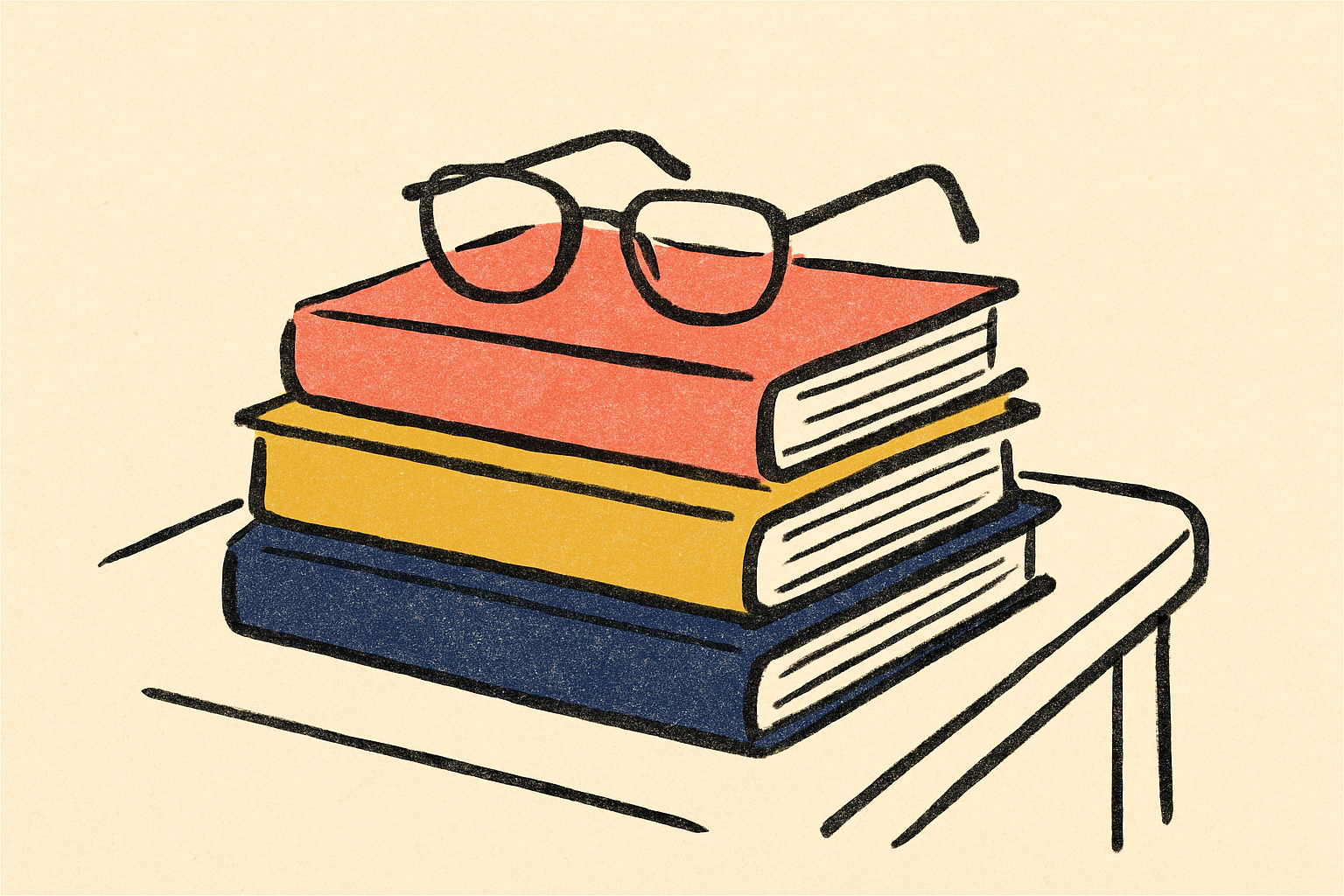
The best books to read after a breakup are not generic self-help. They are specific to the emotion you are stuck in: rage, grief, identity loss, attachment chaos, or the strange uncrowded plateau where you might be ready to date again and want to do it less stupidly this time. Below are twelve books, organized that way, with honest notes on which ones to read in week one and which ones to absolutely save for month three. A few are science. A few are memoirs. One is a novel. One is a 600-page self-help brick that has earned the right to be a 600-page self-help brick.
The short version
| If you are mostly feeling | Read |
|---|---|
| Rage and disrespect | All About Love — bell hooks |
| Grief that you cannot organize | Tiny Beautiful Things — Cheryl Strayed |
| "Who even am I now" | Wild — Cheryl Strayed |
| Anxious-attachment chaos | Attached — Amir Levine & Rachel Heller |
| Avoidant or disorganized patterns | Hold Me Tight — Sue Johnson |
| Curiosity about why love is like this at all | Why We Love — Helen Fisher |
| Why your sex life and your love life keep colliding | Mating in Captivity — Esther Perel |
| You want a roadmap for the next year | 101 Essays That Will Change the Way You Think — Brianna Wiest |
| You want to feel less alone, in a literary way | Heartburn — Nora Ephron |
| You want a full-immersion catharsis | Wuthering Heights — Emily Brontë |
| You want permission to leave for good | Eat, Pray, Love — Elizabeth Gilbert |
| You want a no-nonsense workbook | The Mountain Is You — Brianna Wiest |
Now the real reviews.
The science section
"Why We Love" — Helen Fisher
Helen Fisher is the anthropologist who put people in fMRI machines after they had been dumped and watched their reward systems light up like cocaine withdrawal. Why We Love (2004) is the book where she lays out her three-system model of romance: lust, attraction, attachment. They run on different brain chemistry. They can come apart. The reason your breakup feels like a substance withdrawal is that, neurochemically, it is one.
Read this when you want to stop pathologizing yourself for "not being over it yet." The book is gentle and curious and not preachy. The science is dated in places (her dopamine framing has been refined since), but the framework still holds.
Read in: week three onwards, once you can tolerate calm prose.
"Attached" — Amir Levine and Rachel Heller
The pop introduction to adult attachment theory. Levine and Heller take Mary Ainsworth's and Hazan and Shaver's work and translate it into "are you anxious, avoidant, secure, or disorganized, and how does that show up in dating." The book has flaws. It oversimplifies. It can read as if you should be cataloging your partners like Pokemon. It is also probably the single most useful book a person who keeps ending up in the same kind of relationship can read.
If you finished a breakup and your first thought was "why does this keep happening to me," this is the book.
Read in: week two or later. Earlier than that and you will use the framework to diagnose your ex rather than yourself, which is satisfying and useless.
"Hold Me Tight" — Sue Johnson
Johnson is the developer of Emotionally Focused Therapy, which is one of the few couples therapies with strong empirical support. Hold Me Tight (2008) is ostensibly for couples. After a breakup, it is something stranger and more useful: a clean, accessible explanation of how attachment-related conflict actually works in adult relationships.
This is the book that, read after a breakup, makes you go "oh, that is what was happening to us in those fights."
Read in: month two or later. Too soon and the couple-y framing will sting.
"Mating in Captivity" — Esther Perel
Perel is famously a couples therapist who writes about the tension between desire and security in long-term relationships. Mating in Captivity (2006) is essential not because it will fix your breakup, but because it will reframe the entire category. Most of what we are told about love is intimacy-maximalist. Perel argues that desire requires a little air, a little otherness, a little gap.
Read this when you want to understand the breakup as more than a personal failure. It is a book that lets you be less mean to yourself.
Read in: anytime, but it lands harder once you can be curious about what you actually want next.
The memoir section
"Tiny Beautiful Things" — Cheryl Strayed
Strayed wrote the Dear Sugar advice column anonymously for years, and Tiny Beautiful Things (2012) is the collected best of it. Read at random. Every fourth letter is a heartbreak letter, and every one of Strayed's answers is the answer you wish a wiser older friend would give you.
The famous line, from a letter she answered in her thirties about not having children: "I'll never know, and neither will you, of the life you don't choose. We'll only know that whatever that sister life was, it was important and beautiful and not ours." Substitute "love" for "life" and you have the heartbreak version.
Read in: any week. This book is portable. Keep it on your nightstand for six months.
"Wild" — Cheryl Strayed
The memoir of Strayed hiking the Pacific Crest Trail) after her mother's death and her divorce. It is also, almost incidentally, the most useful "I lost myself in a relationship and need to find me again" book in print.
Strayed is good on the specifics. The boots. The bad days. The kindness of strangers. The slow recovery of a self.
Read in: week three onwards. Earlier than that and the level of physical adventure will make you feel inadequate for not having sorted your life out yet.
"Heartburn" — Nora Ephron
The fictionalized memoir of Ephron's marriage to Carl Bernstein), who left her for someone else while she was pregnant. It is short, funny, savage, and contains recipes. It is one of the few breakup books that gives you permission to be hilarious about the worst thing that has happened to you.
If you are tired of being told how to feel, read Ephron. She does not tell you how to feel. She tells you what she ate.
Read in: any week. Particularly good for week one if you need to laugh.
The catharsis section
"Wuthering Heights" — Emily Brontë
Yes, really. Sometimes you need full-immersion romantic doom that is not your romantic doom. Wuthering Heights is 200 pages of haunted moors and obsessive ruination, and reading it is the literary equivalent of watching a hurricane from inside a well-built house. You get to feel the largeness of feeling without having any of it land on you personally.
A reading warning: do not read Wuthering Heights and confuse Heathcliff for a romantic ideal. He is a horror. The book knows. Brontë knows. If you find yourself rooting for Heathcliff, put the book down and pick up the attachment theory section.
Read in: any week, but with the warning above.
"Eat, Pray, Love" — Elizabeth Gilbert
This book has been mocked into the ground, mostly by people who have not read it. The actual book is sharper and stranger than its reputation suggests. The first third, where Gilbert describes the bathroom-floor decision to leave her marriage, is one of the cleaner articulations in print of I want my life back.
You do not need to fly to Italy. You do not need a yoga retreat. The book is about giving yourself permission, which is, more often than not, the only thing missing.
Read in: week two onwards, when you can tolerate the privilege without it making you furious.
The structural section
"All About Love" — bell hooks
The book to read when you suspect, correctly, that the problem was not just him. All About Love (1999) is hooks's argument that love is a verb and a practice and not a feeling that strikes you, and that most of us were taught wrong about what it is.
This is a quiet book. It does not vent. It rewires.
Read in: any week. Particularly useful if your breakup was the third or fourth in a recognizable pattern.
"101 Essays That Will Change the Way You Think" — Brianna Wiest
Wiest is the most-cited self-help author on TikTok, which is both a recommendation and a warning. The essays are short, the prose is occasionally aphoristic in a way that can feel like a poster, and yet they cumulatively do something. Read three at a time, not thirty.
Read in: weeks two through eight. The dosage matters. This is a book that is medicine in small doses and overwhelming in large ones.
"The Mountain Is You" — Brianna Wiest
The companion. More structured. About self-sabotage specifically, which is the secret subject of most breakups when you are honest about your own role. The book has earned its place on the bestseller list, though it occasionally crosses into the kind of language that wants to be tattooed.
Read in: month two or later. Earlier and you will resist the diagnosis. Later and it will land.
What not to read in week one
A short, honest list of books that are great in their own right and bad for you right now:
- Anything by Nicholas Sparks. I am not being a snob. The books are designed to make you cry about love that you cannot have, which is exactly the chemical you are trying to come off.
- Anything labeled "manifest your soulmate." You are not in a manifesting state. You are in a recovery state.
- Romance novels where the central conflict is the protagonist's ex returning. You can guess why.
- **Books about narcissists, if your ex was not actually a narcissist.** "Narcissist" has become a useful catch-all for "person who hurt me." Reading the literature can be clarifying. It can also lock in a story that is keeping you stuck. Use with discernment.
A reading schedule that actually works
Here is what I would do, having seen a lot of breakup-reading-lists fail to produce reading.
- Week one. Cheryl Strayed, Tiny Beautiful Things. Read at random. Three letters at a time. No goals.
- Week two. Nora Ephron, Heartburn. Cover to cover in two sittings. Laugh.
- Week three. Levine and Heller, Attached. Skim the first half. Stop when you have your type.
- Weeks four through eight. Helen Fisher, Why We Love, in chunks. Read with a pen.
- Month three. bell hooks, All About Love. Slow. Once through.
- Month four onwards. Whatever you want. You are reading again, which means you are back.
A scenario: it is a Sunday afternoon, you are six weeks in, and you cannot tell if you are sad or just bored. You read forty pages of Strayed. You make coffee. You read forty pages of Ephron. You are still sad. You are also slightly less alone, because Strayed and Ephron are alive on the page and they have been here before you. That is what the right book in the right week does.
You will not read your way out of a breakup. But the right book at the right time will close the gap between "I am the only person who has ever felt this" and "I am one of millions of people who have felt this and built a life on the other side." That gap is most of the suffering.
Now go to the library. Then put the phone in another room. Then read.